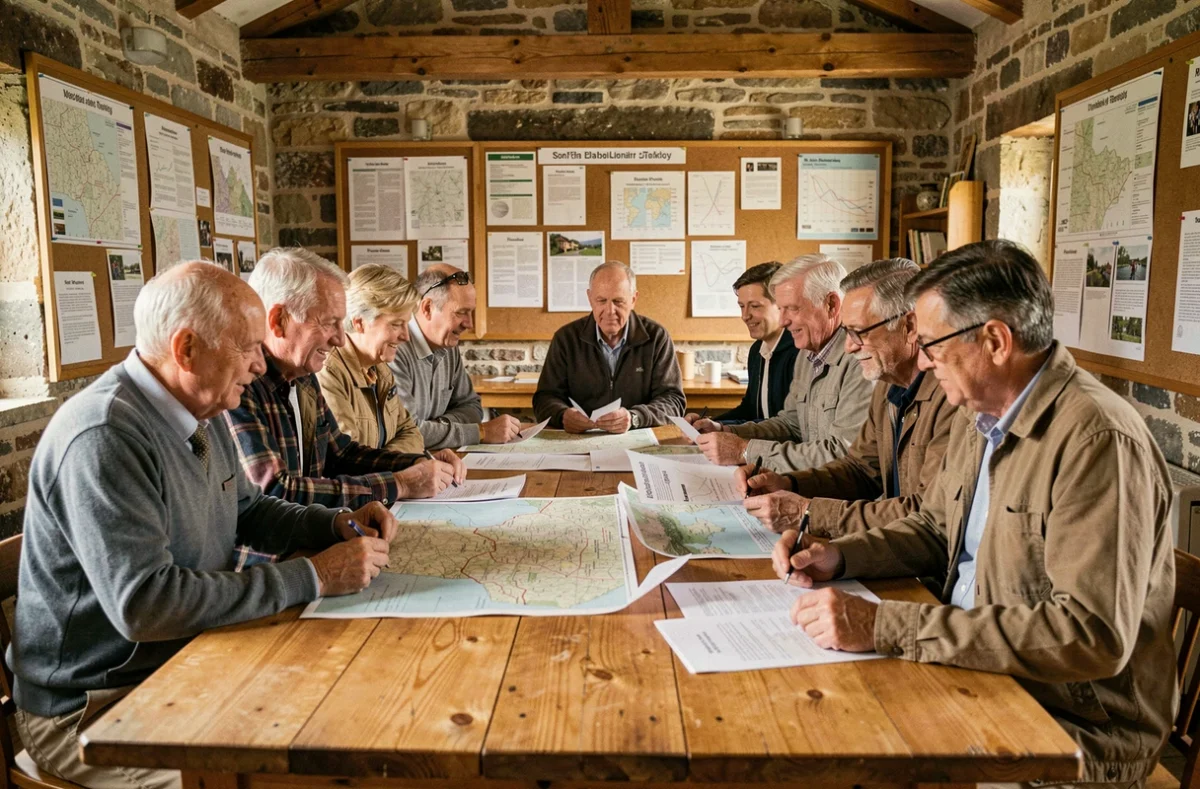
A community of municipalities is a public intermunicipal cooperation body (EPCI) with its own tax-raising powers. It brings together several neighbouring municipalities that transfer some of their responsibilities to this shared organisation.
There are 992 communities of municipalities in France, bringing together around 74% of French municipalities and a third of the population. Their purpose is based on a simple principle: enabling municipalities, often with limited resources, to jointly deliver projects and services that none of them could fund or manage alone.
Intermunicipal funding: where the money comes from and why it falls short
Before looking at the services provided, it is important to understand how a community of municipalities funds its activities. Intermunicipal bodies have their own tax-raising powers, meaning they directly collect certain local taxes, including the business property tax (CFE) and a share of VAT.
They also receive government grants and subsidies linked to specific programmes. Member municipalities contribute as well, based on the responsibilities they have transferred.
On paper, the system seems robust. In practice, budgetary constraints weigh heavily on intermunicipal bodies’ ability to invest in facilities and services. The Association of Mayors of France and public works organisations regularly warn that local authorities have fewer resources at their disposal. A local area looking to build a shared swimming pool, renovate a water network or open a healthcare centre often has to choose between competing priorities because funding is insufficient.
This financial pressure explains why not all communities of municipalities provide the same level of services. The size of the area, its population and its local tax base create significant disparities between intermunicipal bodies. The initiatives featured on cc-bellegardois.fr illustrate the wide range of areas a community of municipalities can cover across a local catchment area.
Mandatory and optional responsibilities of communities of municipalities
The legal framework distinguishes between two categories of intermunicipal responsibilities. Mandatory responsibilities, set out by law, apply to all communities of municipalities. Optional responsibilities are chosen freely by local elected representatives.
What the law requires
Two broad areas are covered by statutory requirements:
- Spatial planning: preparing intermunicipal planning documents, managing business parks and drawing up the territorial coherence plan.
- Economic development: creating and maintaining business parks, supporting local businesses and promoting tourism in the area.
- Following a recent reform, water and wastewater management has also become a mandatory responsibility. However, the law allows certain tasks to be delegated to a member municipality or to a syndicate within the intermunicipal area.
What local representatives choose to add
Beyond the mandatory responsibilities, each community of municipalities can choose to take on additional ones, such as waste management, cultural policy, sports facilities, roads, early childhood services and on-demand transport. The concept of community interest defines the dividing line: for each responsibility, elected representatives decide what falls under the intermunicipal body and what remains the responsibility of each municipality.
This flexibility creates a highly varied landscape. Two communities of municipalities of a similar size may offer very different services, depending on local political choices.
Everyday services: how intermunicipal cooperation makes a difference
Waste collection and treatment are among the most visible responsibilities for residents. Organising collection routes, managing recycling centres and introducing recycling schemes all require logistical resources that a small municipality could not maintain on its own.
France Services centres, established in many intermunicipal areas, provide convenient access to administrative services. For example, the 2025 activity report of the Community of Municipalities of Miribel and the Plateau documents transport services, libraries and support for energy-efficiency renovations, all managed at the intermunicipal level.

The development of multidisciplinary healthcare centres is another practical measure. In response to the decline in access to medical care, several communities of municipalities fund the construction of premises and offer attractive terms to encourage healthcare professionals to set up practice. Pooling resources makes it possible to provide facilities that no municipality could build or operate on its own.
Democratic visibility: the weak point of intermunicipal cooperation
Community representatives are not elected separately by direct universal suffrage. They sit on the community council based on the results of municipal elections. This has a direct consequence: most residents do not know who makes intermunicipal decisions or what those decisions concern.
Several analyses point out that intermunicipal bodies wield growing power but remain largely out of the public eye. The budgets they manage, the responsibilities they exercise and the projects they deliver have grown considerably over the past thirty years, without democratic visibility keeping pace.
This lack of visibility fuels criticism of the legitimacy of the intermunicipal tier itself. The current political debate centres on whether this structure is appropriate: some political groups propose abolishing intermunicipal bodies, while others call for greater transparency and stronger governance.
For residents, the question is straightforward: who decides whether to close a recycling centre, where to build a cycle path or whether to keep a transport route running? When the answer is “the community of municipalities”, residents still need to know where to find council minutes, agendas and resolutions.
Communities of municipalities that publish detailed activity reports and hold public meetings help bridge this gap. A thriving local area depends not only on its facilities, but also on residents’ ability to understand and question the decisions made on their behalf.