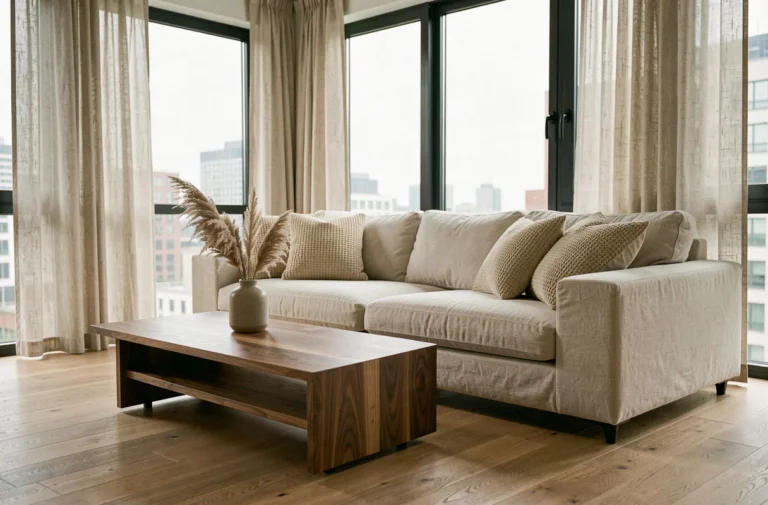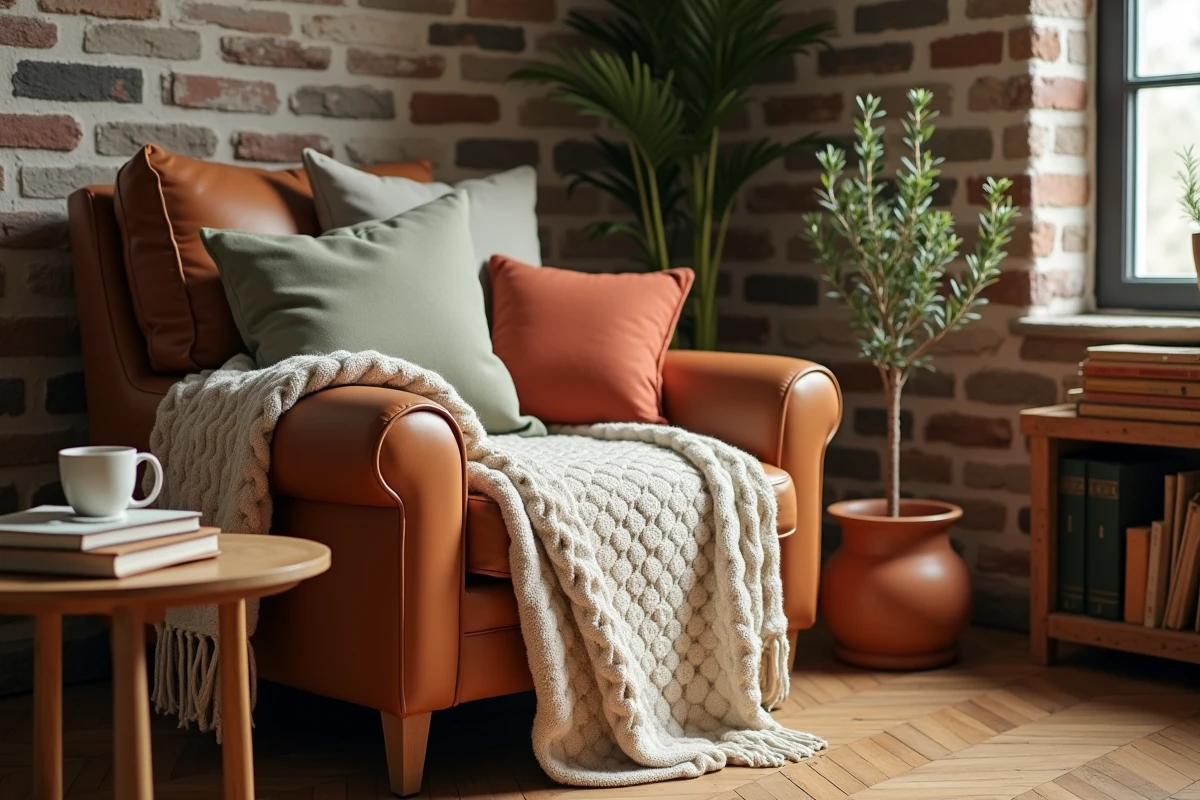
A warm interior does not rely on the accumulation of decorative objects. The feeling of comfort perceived depends on specific technical parameters: color temperature of light sources, reflectance index of surfaces, density of absorbent textures, and the ratio between solid and empty volumes in the room. We will detail the levers that truly matter for creating a cozy and welcoming space at home.
Color temperature and color rendering index: the foundation of a cozy atmosphere
Lighting conditions the perception of warmth much more than the color of the walls. A LED bulb with a high color temperature (above 4,000 K) casts a cold white light that negates decorative efforts, even in a living room with warm tones.
We recommend limiting all sources to a maximum of 2,700 K in living areas. This value corresponds to the light of a classic incandescent bulb, which naturally flattered woodwork and textiles.
The color rendering index (CRI) is the second parameter to check. A CRI above 90 faithfully reproduces the warm hues of wooden furniture, leather, or terracotta. Below this, the shades turn grayish. To delve deeper into this type of decorative detail and find concrete inspirations, we regularly consult angiesweethome.com, which addresses these topics from a practical angle.
Multiplying light points remains the basic principle: a single ceiling light creates flat lighting. Three to four sources distributed at different heights (table lamp, reading lamp, low pendant, indirect strip) generate a gradient of soft shadows that envelop the space.

Acoustic absorption and textile choices in a cozy living room
A warm living room is primarily a quiet living room. Hard surfaces (tiles, polished concrete, large windows) reflect sound and produce reverberation that makes the space feel cold, regardless of the color palette used.
The addition of absorbent materials corrects this phenomenon. Thick textiles play an acoustic role as much as a visual one. A dense velvet rug placed under the coffee table, lined curtains that reach the full height of the wall, a boucle wool throw on the sofa: each textile layer reduces the room’s reverberation time.
The choice of fibers matters. Natural materials (wool, linen, brushed cotton) absorb sound better than smooth polyester. They also age differently: while synthetic materials accumulate static electricity and attract dust, natural fibers develop a patina that enhances the cozy feeling over the seasons.
- Woven wool or jute rugs for circulation areas, with sufficient thickness to cushion footsteps
- Washed linen or cotton velvet cushions on the sofa and accent chairs, varying the sizes
- Heavy linen or lined cotton curtains, falling to the floor to maximize the absorbent surface
- Thick knit throws placed on the armrests, easily accessible
Color palette: going beyond beige for a warm interior
Neutral tones (off-white, greige, sand) provide a safe base, but they are not enough to create warmth. Depth comes from saturated colors applied in small touches: terracotta, burnt ochre, olive green, tobacco brown.
The most reliable technique is to work with adjacent color circles. A terracotta accent wall works with a honey-colored sofa and rust-colored cushions because these shades share a common pigment base. Introducing a bright blue into this composition would break the perceived thermal continuity.
Wood plays a binding role. Light oak, walnut, oiled beech: solid wood furniture brings warmth that melamine cannot replicate, because the natural variations in the grain diffuse light unevenly. This micro-texture is perceived unconsciously as organic and reassuring.
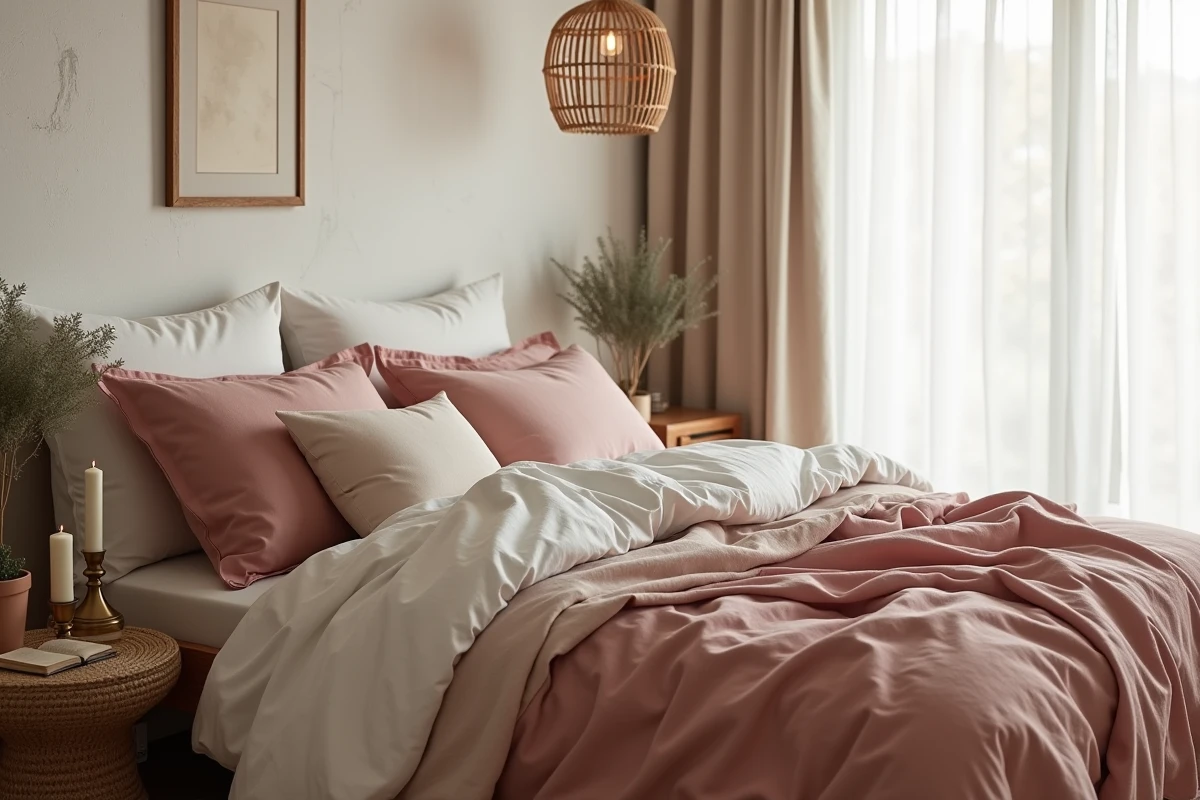
Common pitfalls in color choice
Anthracite gray, very present in contemporary decor, significantly cools a space as soon as natural light decreases. In a north-facing room, we advise against using it as the main surface. It is better reserved for small elements (frames, furniture legs) where it provides contrast without dominating the ambiance.
The total white look, even when enhanced with textures, produces a clinical effect under artificial lighting. A single surface painted in a warm tone (the back of a niche, the wall behind the sofa) is enough to anchor the room.
Circulation and proportions of furniture in the living space
A cluttered living room will never be welcoming. The perceived warmth also depends on the ability to move effortlessly within the room. We often observe the same flaw: an oversized sofa that compresses the residual space and prevents any fluidity.
The ratio to respect between surfaces occupied by furniture and free surfaces is around 60/40 in favor of emptiness. This ratio leaves enough space to circulate while maintaining a sufficient density of elements to avoid the impersonal loft effect.
- Place the sofa first and size the rest of the furniture according to the remaining space
- Prefer a moderately sized coffee table rather than an XXL model that blocks the passage
- Maintain a clearance of at least 60 cm around the seating for natural circulation
Low furniture amplifies the feeling of space and comfort. A sideboard that does not exceed the height of the sofa seat keeps the line of sight clear. The eye then perceives a more generous volume, which directly contributes to the feeling of welcome.
The last lever, often overlooked, is the coherence of the legs. Mixing a sofa on thin legs, a table on a solid base, and a wall-mounted TV unit creates visual agitation. Harmonizing the base lines of the furniture calms the reading of the room and reinforces the impression of a thoughtfully designed interior, where each element has its place.