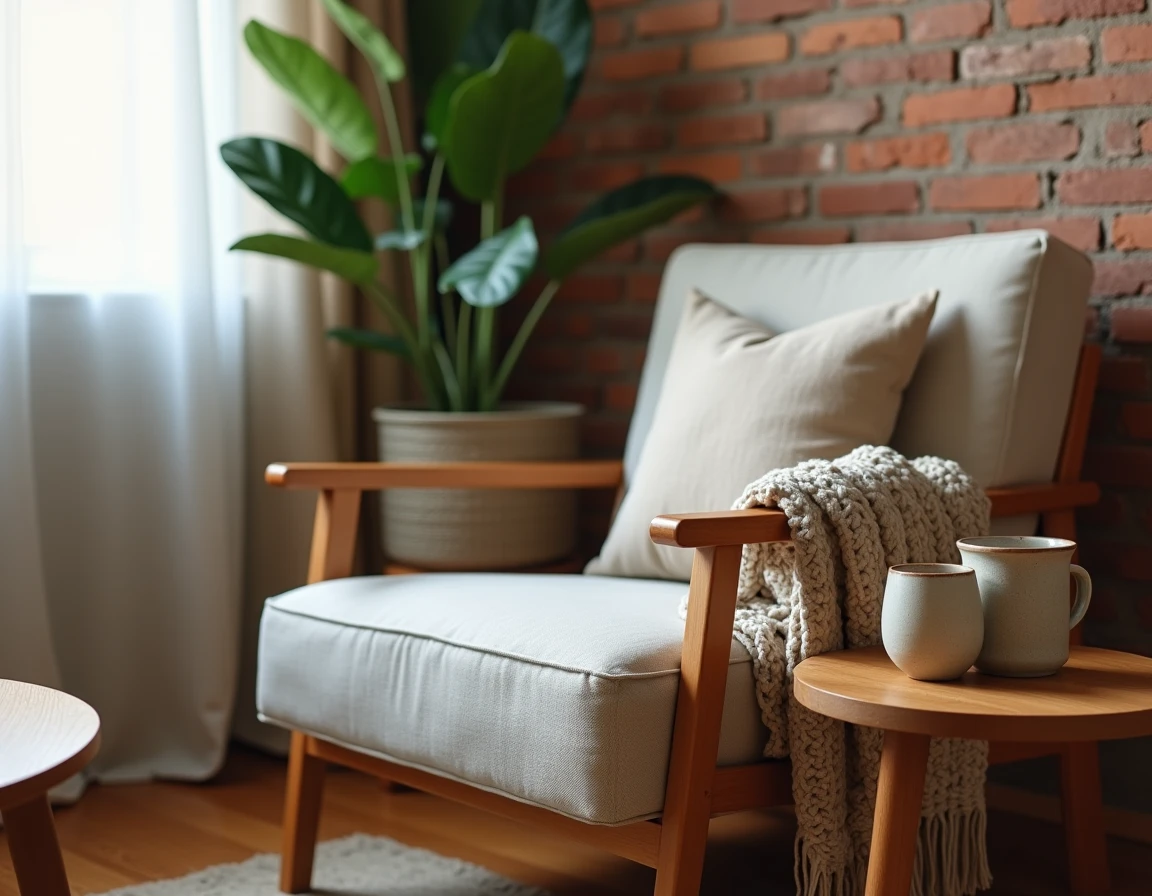
A warm interior is not just about piling blankets on a sofa. The 2023 barometer from the Alliance HQE-GBC on quality of life in housing places thermal and acoustic comfort (effective insulation, absence of cold walls) among the top factors associated with a warm home, ahead of decoration or wall color. In other words, the feeling of warmth in an interior starts with its technical performance before moving on to aesthetic choices.
Insulation and thermal comfort: the foundation of a truly warm interior
Before choosing wallpaper or a paint shade, the first question concerns the building envelope. A poorly insulated room, with cold walls or drafts, will never seem welcoming, regardless of the furniture installed.
The France Rénov’ program and the MaPrimeRénov’ aids (2024 reform) emphasize this direct link between insulation work and the feeling of warmth in living spaces. The official brochures from the Ministry of Ecological Transition remind us that the impact is not limited to the energy bill: eliminating a cold wall in a living room or bedroom physically alters the perception of comfort.
Specifically, three areas deserve to be checked before any decor project:
- Windows: single glazing or a faulty seal creates a cold zone that lowers the perceived temperature, even with effective heating.
- Walls facing outside: internal insulation (such as wood wool lining) reduces the cold wall effect without altering the facade.
- The floor: an uninsulated ground floor cools the entire room, and no rug, no matter how thick, can sustainably compensate for this flaw.
By consulting the presentation of Youpi La Maison, one finds this logic that combines decor tips with reflection on the overall living environment, without artificially separating the technical from the aesthetic.
Natural and sustainable materials for a coherent home decor
The 2024 report from the Observatory of Lifestyles and Responsible Consumption (France Stratégie) notes that the French increasingly associate the notion of a warm interior with sustainability criteria: natural materials, second-hand, low carbon footprint. This trend has significantly progressed since 2020.
This observation changes the way we approach decoration on a daily basis. Rather than accumulating mass-produced decorative objects, the approach is to select materials that age well and provide real texture to the touch.
Wood, linen, and wool: a trio that works in every room
Solid wood (oak, beech, walnut) brings a warm color and a patina that evolves over time. In the kitchen, an oiled wood countertop or a raw oak shelf is enough to warm up a tiled room. In the bedroom, a headboard made of recycled wood is a better choice than a melamine panel.
Linen, used in curtains or cushion covers, diffuses light without suffocating it. Its slightly crumpled texture gives a natural look that polyester cannot replicate. Wool, in throws or rugs, absorbs sound and regulates humidity, two properties that directly contribute to the acoustic and thermal comfort identified by the Alliance HQE-GBC.
Second-hand and thrifted objects
A thrifted piece of furniture tells a story and breaks the uniformity of an interior that looks like it came out of a catalog. A 1960s sideboard in a contemporary living room, an antique mirror in an entryway: these contrasts create visual depth.
Second-hand also has a practical advantage: antique solid wood furniture is often sturdier than their new particle board counterparts. Their longevity naturally extends the consumption cycle.
Light and color: two technical levers often misused
Artificial light plays a decisive role in the atmosphere of a living space. Most interiors use a single central light source (ceiling light or pendant) that produces uniform, flat light. This setup illuminates but creates no depth.
Multiplying light sources at different heights transforms the perception of a space. A reading lamp next to an armchair, a warm-temperature string light along a shelf, an adjustable floor lamp in a corner: these light points define areas in the room and invite people to settle in.
Color temperature of lighting
Warm-temperature bulbs (around 2,700 kelvins) produce a soft yellow light, suitable for the living room and bedroom. Cool-temperature bulbs (over 4,000 kelvins) are appropriate for the kitchen or work surface, where visual precision is paramount. Mixing the two in the same room creates an unpleasant visual imbalance.
Wall colors: coherence before boldness
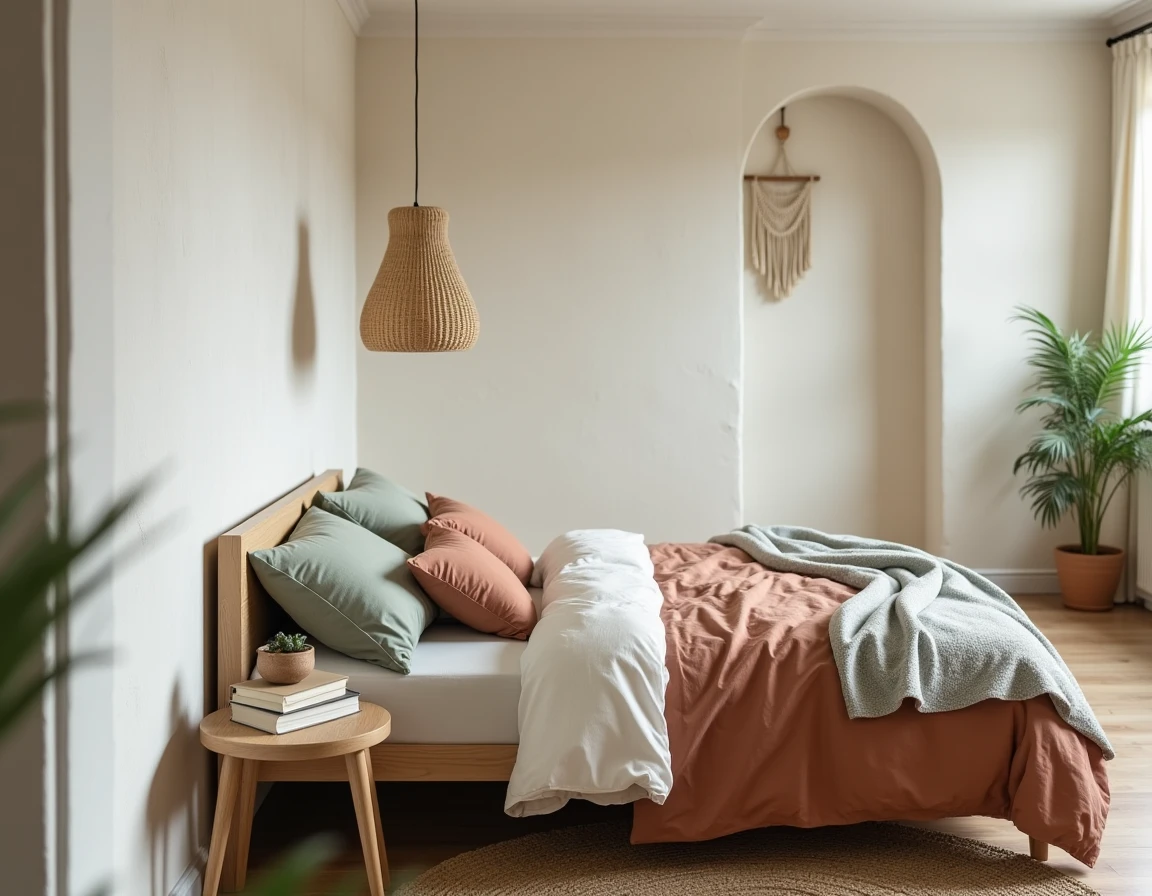
A wall in a strong shade (terracotta, sage green, powder pink) warms up a space as long as it remains coherent with the furniture. Applying a bright color on four walls visually closes off the room. One accent wall is enough to structure a living room or bedroom without reducing overall brightness.
Patterned wallpaper is making a comeback in trends, especially for children’s or teen rooms. A wall with discreet geometric patterns, paired with three solid walls, adds character without saturating the space.
Adapting decor to family life rhythm
A warm interior must function daily, not just in a photo. For a family with children, this means choosing washable fabrics, durable surfaces, and accessible storage.
Some concrete principles make a difference:
- Plan for closed storage in living areas to absorb everyday clutter without sacrificing aesthetics.
- Choose removable sofa covers rather than fixed upholstery, especially with young children.
- Install a reading nook or a quiet space in each room, even if small, so that each family member has a place of their own.
- Change the decor with the seasons: light linen cushions in spring, thick wool throws in winter.
This seasonal rhythm, far from being a gimmick, renews the perception of one’s own space without incurring significant expenses. Changing the textiles in a living room twice a year costs little and has an immediate effect on the room’s atmosphere.
Ultimately, the warmth of an interior lies in the coherence between the structure, materials, and lifestyle habits. A well-insulated wall, well-positioned lighting, and a few carefully chosen natural materials produce a more lasting result than an accumulation of decorative accessories.