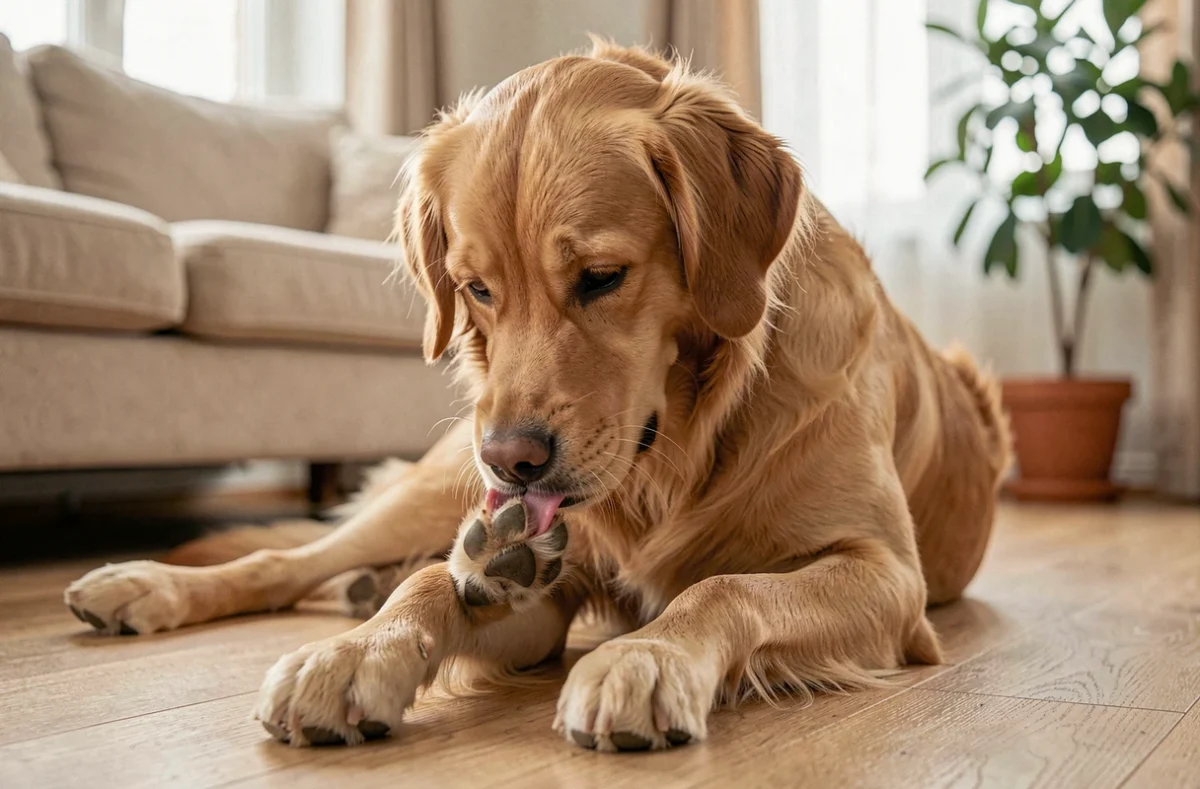
The dewclaw is a vestigial claw located high on the dog’s paw, most often on the front legs. Because it does not touch the ground, it does not wear down naturally and can pose problems that other claws do not experience. When a dog starts to lick this area repeatedly, the action almost always indicates a local discomfort that needs to be identified before considering a behavioral cause.
Ingrown or split dewclaw: the local cause indicated by licking
The first reflex when facing a dog that licks its dewclaw is to examine the claw itself. A dewclaw that is too long eventually curls back towards the pad, penetrates the skin, and causes sharp pain accompanied by inflammation. This scenario is common because the dewclaw, unlike other claws, never wears down against asphalt or hard ground.
A partially split or torn claw is another common trigger. The dog then licks the area to try to relieve the pain. Saliva provides a temporary cooling sensation, but the persistent moisture delays healing and promotes bacterial contamination.
To delve deeper into this topic, the advice from Les Animaux de la Fée details the actions to take depending on the severity of the injury.
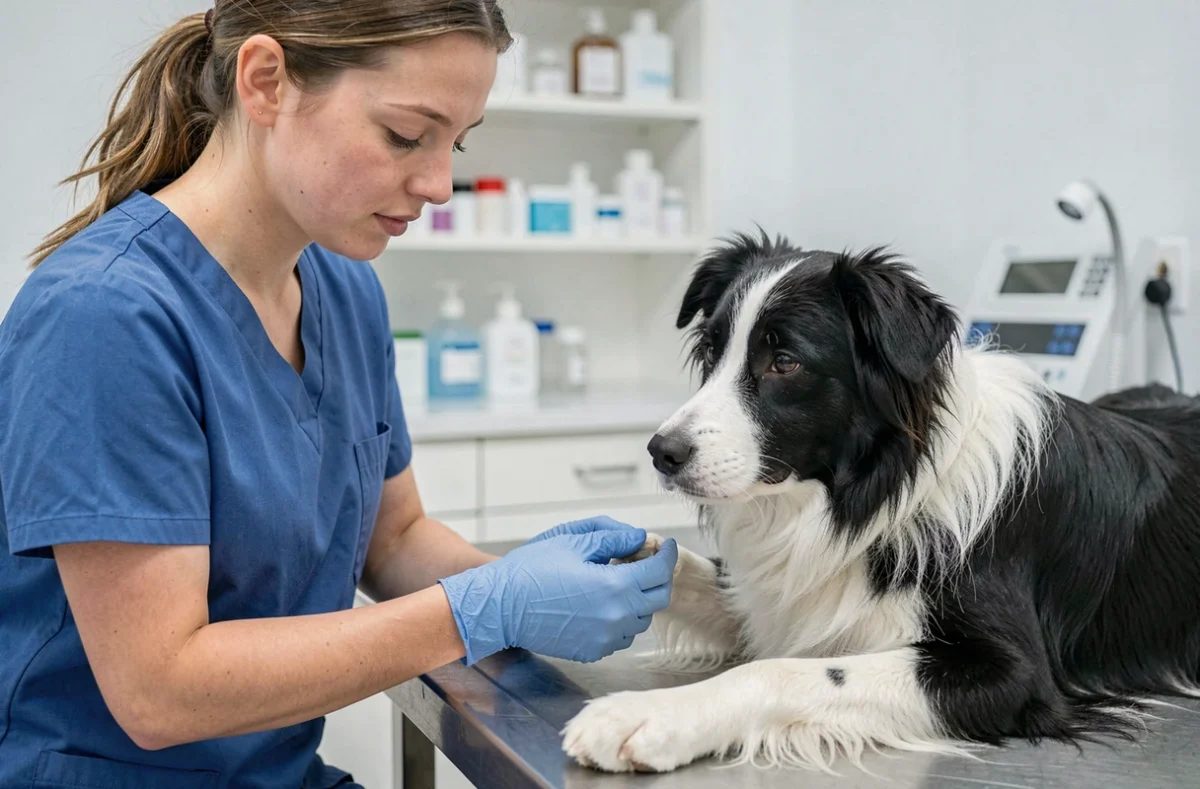
Signs that should prompt a quick veterinary consultation:
- The dewclaw is hanging or seems detached from its bed, with even slight bleeding
- The base of the claw is swollen, warm to the touch, or emits an unusual odor
- The dog is limping noticeably or pulls its paw away as soon as the area is approached
In these cases, avoid pulling on the claw or attempting a trim: an improperly performed extraction can damage the nail bed and complicate healing.
Persistent licking of the dewclaw and infectious vicious cycle
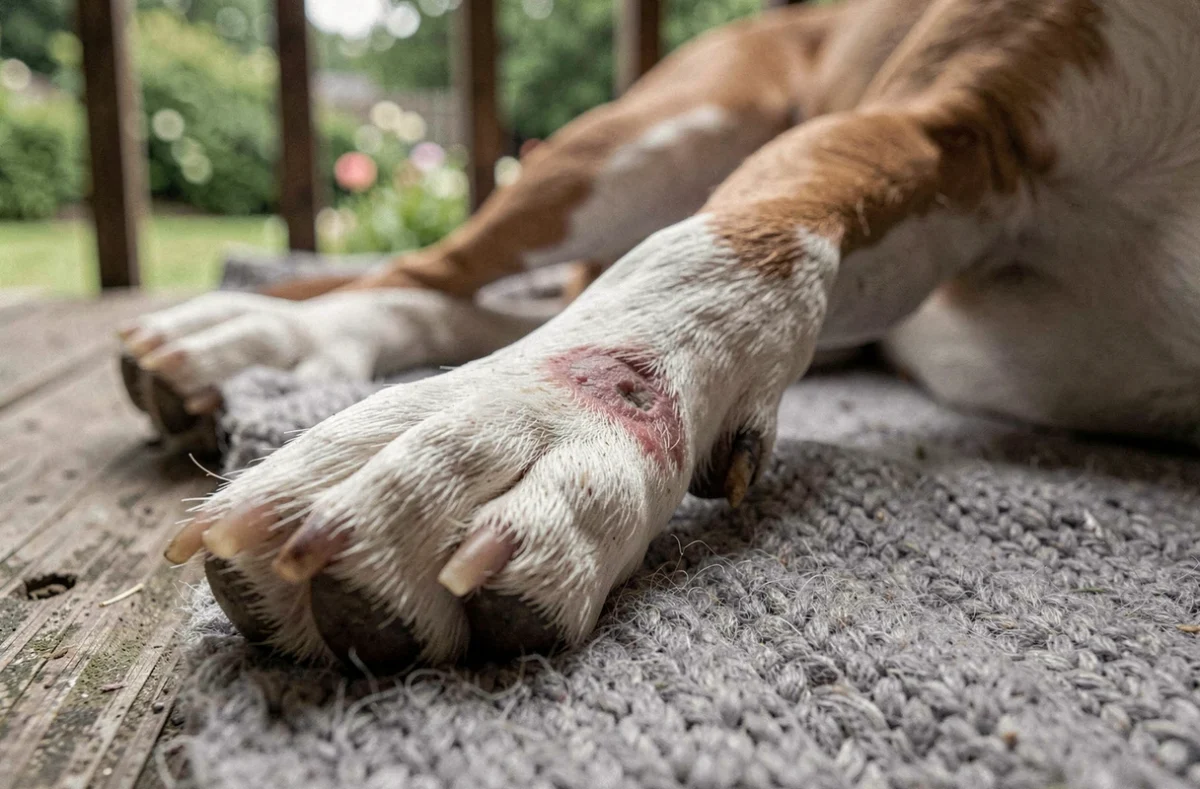
A small injury to the dewclaw may seem harmless. The problem arises when the dog licks the area continuously for several days. The moisture maintained by saliva creates an environment conducive to bacterial proliferation, turning a micro-injury into a claw bed infection.
This infection intensifies pain and itching, which drives the dog to lick more. The cycle perpetuates itself and can lead to a characteristic licking wound: thickened, reddened skin, sometimes oozing.
Breaking the cycle with an Elizabethan collar
The Elizabethan collar remains the most reliable method to prevent the dog from accessing its dewclaw. A bandage alone on the paw often slips or retains moisture if not changed regularly. A well-fitted collar combined with a clean, dry bandage provides better results than a simple local protection.
The bandage must remain breathable. A bandage that is too tight compresses the paw and can worsen swelling. The veterinarian may prescribe an appropriate local antiseptic if an infection is confirmed.
Multiple claws affected: when the problem goes beyond the dewclaw
A dog that only licks one dewclaw points to a local mechanical cause. However, when the licking involves multiple claws or the nails become brittle, detach, or change color, the situation changes radically.
This profile may signal a skin allergy, an endocrine disorder, or an autoimmune disease affecting the keratin of the claws. A simultaneous involvement of multiple nails warrants a complete veterinary assessment, sometimes including blood tests or a sample.
Food or environmental allergies often cause itching at the tips of the paws. The dog then licks its pads, dewclaws, and the space between its toes. The licking is no longer localized to a single point, but diffuse.
Joint pain masked by licking the dewclaw
An often underestimated aspect: licking a dewclaw can indicate a deep pain that does not concern the claw itself. Wrist (carpal) osteoarthritis or joint inflammation leads some dogs to lick the most accessible area above the painful joint.
This behavior is comparable to the human reflex of rubbing an area close to an internal pain. The dog cannot reach the joint directly, so it focuses its attention on the dewclaw located just above.
Large breeds or older dogs are more affected by this mechanism. If the dewclaw appears healthy upon visual examination (no cracks, normal length, no redness), an X-ray may reveal the true source of the problem.
Preventive care for the dewclaw in dogs
Prevention relies on a simple action: trimming the dewclaw before it becomes problematic. Unlike other claws, this one requires specific attention since it never wears down from contact with the ground.
- Check the length of the dewclaw every two to three weeks, gently parting the hair that sometimes covers it
- Trim with an appropriate nail clipper, staying clear of the vascularized part (the pink pulp visible on light-colored claws)
- For black claws, proceed with small successive cuts and stop as soon as the cut section shows a darker central point
- After a walk on rough terrain, inspect the dewclaws for any cracks or snags before the dog starts to lick
A well-maintained dewclaw causes neither pain nor licking. The majority of veterinary consultations related to dewclaws could have been avoided with regular trimming.
Targeted licking of the dewclaw lasting more than two days warrants an examination of the claw, even in the absence of visible limping. The earlier the problem is identified, the simpler the management remains, whether the cause is a damaged claw, an early infection, or underlying joint pain.