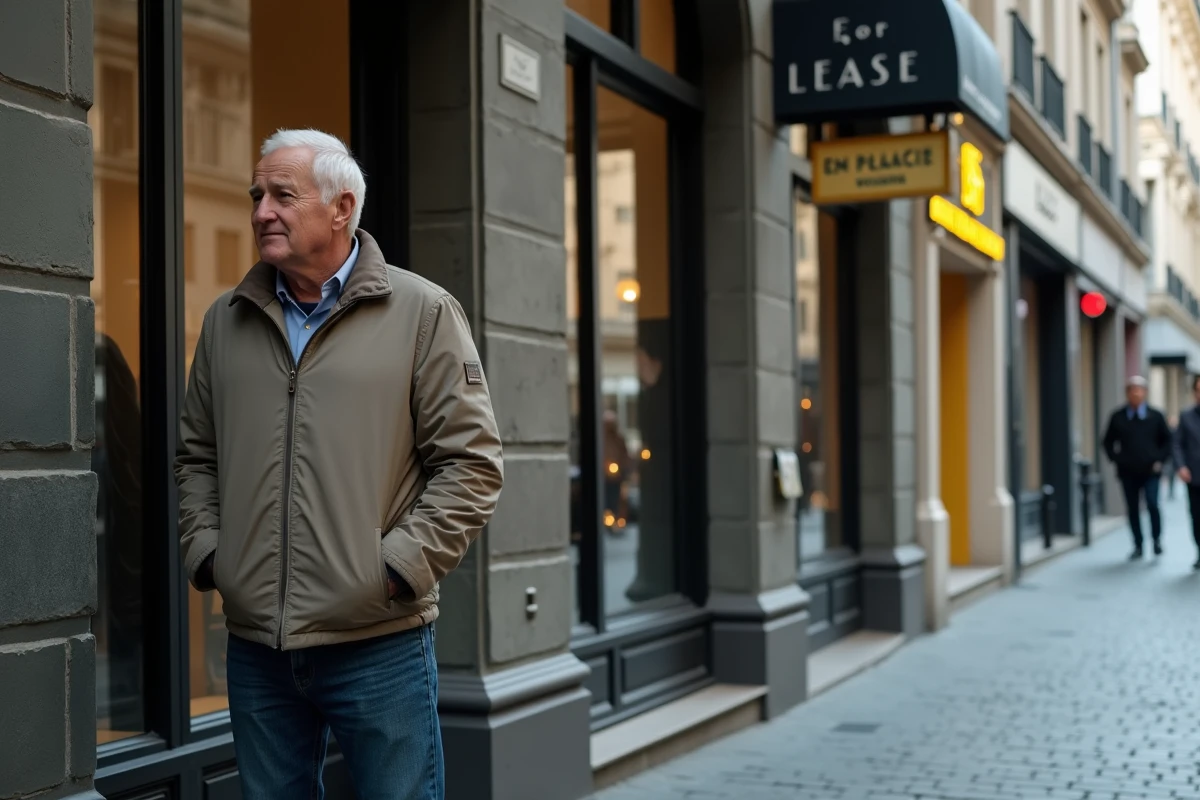
In 2024, Jott was placed in judicial recovery by the commercial court of Marseille. The brand, once a flagship of urban ready-to-wear, saw its retail outlets close in succession across France. Behind these closures are persistent financial difficulties, exacerbated by declining in-store traffic and rising operating costs.
The ready-to-wear sector today shows structural signs of fragility. Historic brands like Jott must contend with the competition from online commerce, changing consumer habits, and a continuous rise in fixed costs. These combined factors are reshaping the landscape of textile distribution.
Jott facing the storm: understanding the crisis hitting ready-to-wear
In Marseille, Jott’s trajectory seemed destined for stability. Born on the shores of the Mediterranean, the brand had established itself in the urban landscape and proudly displayed its down jackets on sidewalks across France. But 2024 breaks the momentum: judicial recovery, shutters down, employees hanging on announcements. The decision of the commercial court of Marseille falls like a sentence, materializing the shockwave that shakes the entire universe of French fashion.
The Jott case is part of a real black series for the sector. For several months, brands placed in judicial recovery have been piling up. If one seeks culprits, they can be found in inflation, skyrocketing rents, and a radical change in how the French consume. Faced with the continuous rise in the cost of living, the temptation of online shopping or second-hand goods prevails, relegating physical stores to the background. Even the support from L Catterton, a fund linked to LVMH, has not been enough to halt the slide.
To understand the closure of Jott stores, one must face the fragility of the current economic model in fashion. Relying on a single flagship product, delaying innovation or adopting new sales channels, and enduring financial pressure: every flaw has counted. The judicial recovery, confirmed by the court, marks the end of a cycle and calls for a deep renewal. France, the country of fashion par excellence, watches helplessly as one of its flagship brands is jeopardized, caught up in the reality of a global market that has become unpredictable and fierce.
What are the underlying causes of Jott store closures?
In the maze of French ready-to-wear, Jott embodies the troubled face of a sector in full transformation. The reasons for this downfall do not stem from a single factor, but from a tangle of economic constraints and social changes that weaken brands, even the most dynamic.
Several causes combine to explain this decisive turning point:
- Persistent inflation: The continuous rise in prices and commercial rents, particularly in city centers and shopping malls, has eroded margins. Fixed costs, already heavy, have become impossible to absorb for retail outlets dependent on a regular flow of customers.
- Change in shopping habits: Faced with pressure on their purchasing power, many French people are opting for online shopping or second-hand goods. Physical stores, long synonymous with proximity and advice, struggle to compete with the speed of digital and the variety of low-cost offers from Asia or fast fashion.
- Market fragmentation: The multiplication of distribution methods and the variety of consumer expectations challenge the traditional model. Brands like Jott, positioned in a mid-range segment, are under pressure from a potential judicial liquidation and must face the urgency of reinventing themselves.
This array of explanations shows how difficult it is, even for an established brand, to cope with the whirlwind of the ready-to-wear crisis and the financial demands imposed by the situation. The judicial recovery pronounced by the court merely reveals the extent of the malaise and pushes the entire sector to consider new foundations.

The consequences for the brand, its employees, and the future of the sector
The judicial recovery announced in Marseille is not limited to abandoned storefronts. For Jott, the debacle tarnishes the reputation of a local success story that just yesterday embodied the renewal of French ready-to-wear. Now under the supervision of the judicial court, the brand must deal with doubt, the search for buyers, and a weakened image. The turnover plummets, a direct consequence of the series of closures and the mistrust of business partners.
For employees, the prospect of a judicial liquidation feels like a brutal jolt. Behind each closed store, there are destabilized teams, careers abruptly halted. Anxiety prevails, especially since support measures, often insufficient, struggle to cushion the shock. Despite discussions about potential redeployments, the reality is clear: in a sector weakened by the war in Ukraine and the economic repercussions felt across Europe, alternatives are sorely lacking.
For the entire sector, the Jott affair acts as a wake-up call. The avalanche of judicial recovery procedures raises a fundamental question about the sustainability of the current model. Between the increasing pressure on CSR, the demand for profitability, market volatility, and ever more demanding consumers, brands have no choice but to revisit their fundamentals. Jott’s fall adds to the long list of shaken brands and reminds everyone that ready-to-wear in France can no longer be satisfied with yesterday.
The shopping street of yesterday, marked by familiar brands, is emptying. The lowered shutters of Jott resonate as a warning: to survive, French fashion must reinvent its benchmarks and rediscover the thread of a collective desire that is now lost.