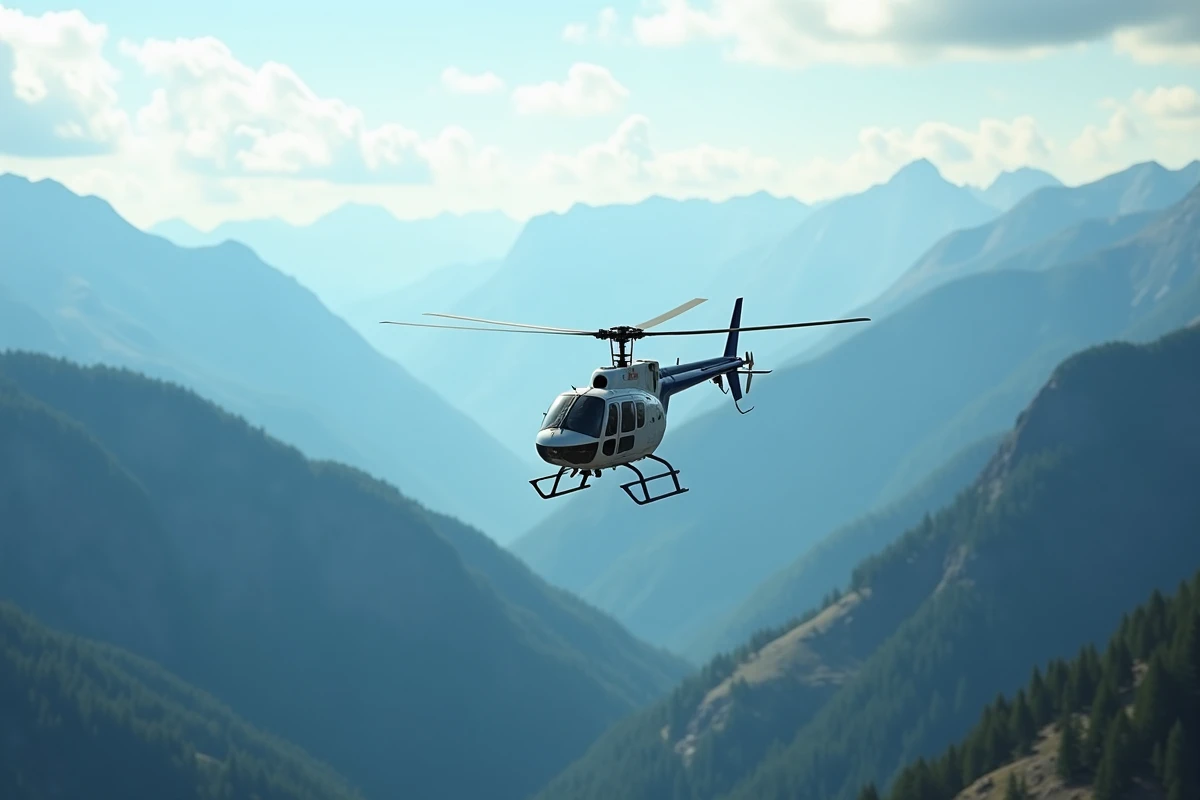
Most light helicopters do not exceed a few hundred kilometers before needing to land for refueling. Some military or heavy transport aircraft push this limit well beyond, but the maximum theoretical distance tells only part of the story. Understanding how far a helicopter can fly requires breaking down a constant technical compromise between weight, lift, fuel consumption, and flight conditions.
Why a helicopter’s range is not just about the fuel tank
Thinking solely in terms of liters of onboard kerosene leads to a dead end. A full tank adds weight, which increases the power needed by the main rotor to maintain lift, thereby increasing consumption. Therefore, the calculation of range relies on a balance point: every additional kilo of fuel reduces the mileage efficiency.
This paradox explains why two helicopters with the same tank volume do not reach the same distance. The empty weight, number of passengers, cargo onboard, and even the shape of the rotor blades alter the equation. An aircraft loaded to its maximum commercial capacity will consume significantly more per kilometer than an aircraft flying empty.
The question of a helicopter’s flight range also depends on the mission profile. A hover (typical of air rescue or load lifting) consumes fuel at an incomparable rate compared to straight cruising flight. The same aircraft, the same amount of fuel, two radically different useful distances.
Altitude, wind, and temperature: variables the pilot cannot choose
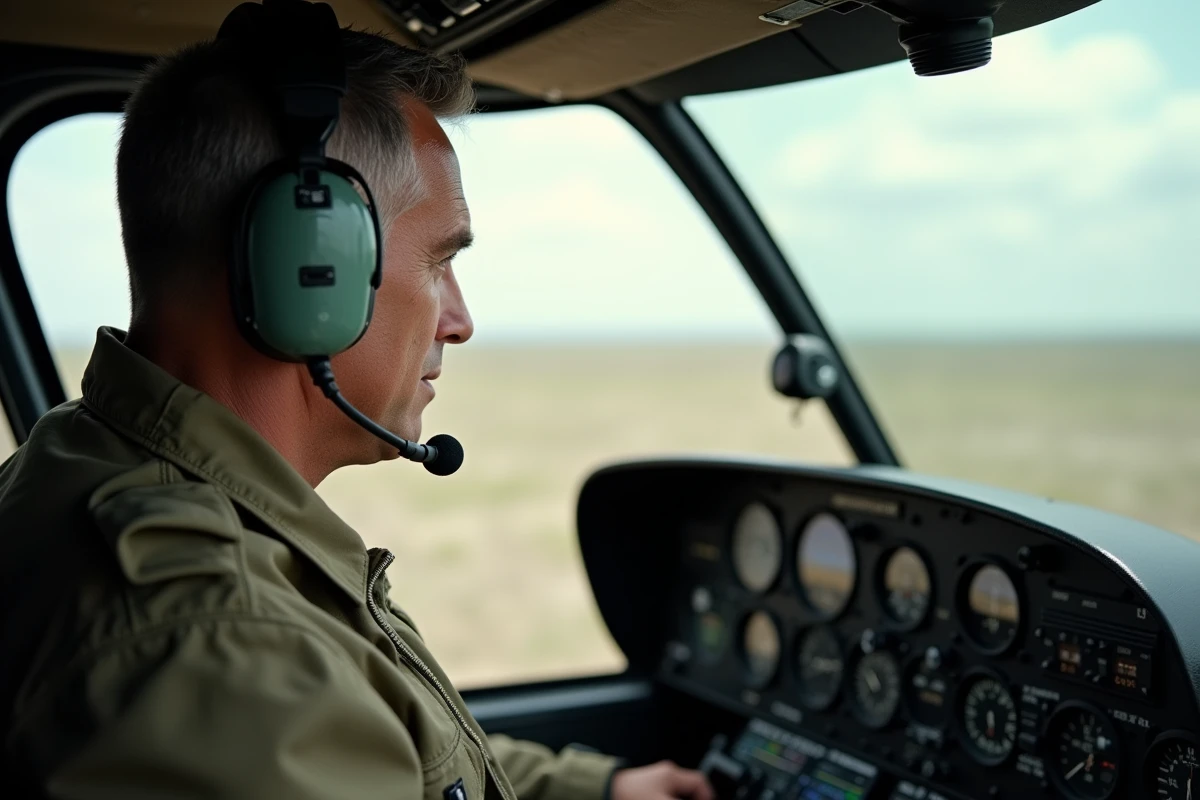
A helicopter does not fly in a laboratory. Ambient air directly conditions its performance. Warm air and high altitude reduce air density, forcing the rotor to spin faster or to have a more aggressive blade pitch to generate the same lift. The engine works harder, consumption rises, and range diminishes.
This phenomenon has a technical name in aeronautics: density altitude. In mountainous areas or under high heat, an aircraft can lose a significant fraction of its theoretical range. Pilots incorporate this parameter into every flight plan, especially for high-altitude rescue missions.
Wind plays an equally concrete role. A constant headwind reduces ground speed without changing airspeed, which extends flight time for the same distance and therefore increases consumption. Conversely, a favorable tailwind can extend the range beyond manufacturer data. Field reports vary on this point, as real conditions often combine crosswinds and turbulence that negate some of the benefit.
Civil helicopter vs. military aircraft: two logics of range
Civil transport or tourism helicopters generally fly at a cruising speed between 200 and 260 km/h. Their design prioritizes passenger comfort, reliability, and operating economy. A light civil helicopter often tops out around 400 km without a stop.
Military aircraft follow a different logic. Their specifications require long missions, sometimes over areas without refueling infrastructure. Some models exceed a thousand kilometers of range, thanks to oversized fuel tanks, in-flight refueling systems, or lightweight configurations for the mission. The price to pay: an operating cost and maintenance complexity that are unparalleled.
Between these two extremes, rescue and medical transport helicopters occupy an intermediate position. Their range must cover a defined intervention area, with a regulatory fuel reserve for the return and unforeseen events. Certification criteria impose safety margins that reduce the usable distance.
- Light helicopters (like the Robinson R44) cover modest distances, suitable for scenic flights, tourism, or short private trips.
- Intermediate aircraft (like the Airbus H155 or Leonardo AW139) serve offshore transport, regional connections, or medical missions, with a more generous range.
- Heavy or military helicopters (like the CH-47 Chinook) carry several tons of cargo and fly long distances, at the cost of massive consumption.
Autonomous helicopters and certification: the limit shifts
The question of “how far” is no longer posed solely in terms of physical distance. Airbus has introduced the U145, an autonomous version of the H145 designed for cargo and certain military missions, with a first flight accompanied by a safety pilot announced for late 2026. The operational limit becomes that of certification, not fuel.
For these unmanned aircraft, permission to fly beyond a restricted area depends on the complete validation of navigation, obstacle detection, and communication systems. Aviation authorities require reliability levels that current tests have not yet fully achieved.
This evolution changes the understanding of maximum usable range. An autonomous helicopter could technically fly longer than a piloted aircraft (no human fatigue, no need for crew changes), but regulations limit its operational perimeter as long as safety evidence remains incomplete. The available data do not yet allow for setting a regulatory range for these platforms.
Maximum distance of a helicopter: what manufacturer figures do not say
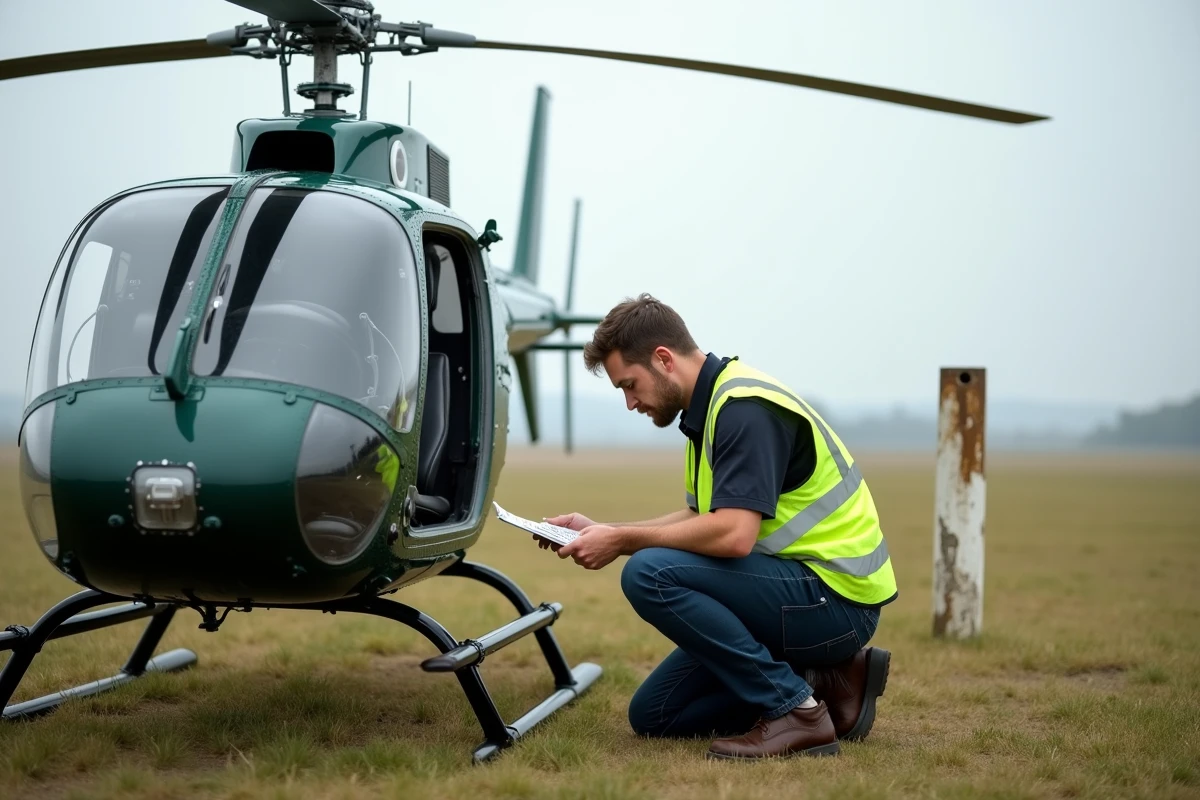
The technical sheets published by Airbus, Leonardo, or Bell display ranges measured under standardized conditions: defined weight, defined altitude, no wind, reference temperature. In real conditions, the usable range is always less than the catalog data.
Regulations impose a minimum fuel reserve upon landing, varying by country and mission type. This reserve, often equivalent to about twenty minutes of flight, reduces the distance that can be traveled. Additionally, there are possible diversions in case of deteriorating weather or helipad closures.
- The actual takeoff weight (passengers, cargo, mission equipment) is almost always greater than the manufacturer’s reference weight.
- Local weather conditions (density altitude, wind, precipitation) systematically degrade theoretical performance.
- Regulatory fuel reserve and diversion obligations cut the usable range by several dozen kilometers.
A helicopter flies as far as the weakest link in this chain allows. The raw distance displayed by the manufacturer serves as a theoretical ceiling, never an operational promise. For a given flight, the pilot calculates a specific range that incorporates each of these constraints, and it is this value, always lower, that determines the mission.